


Where we explore some of the most provocative questions, discoveries, and research in consciousness studies and beyond.
,
, and
Aug 21, 2025

with Stephen Johnson • Thu 21 August, 2025
Hey Big Thinkers,
Big Think’s editorial team spent this summer doing something we’ve never done before: making a magazine. Not a leaflet! Not even a pamphlet! We created a stunning, full-sized, display-it-on-your-coffee-table magazine. It’s packed with essays and interviews (and gorgeous artwork) about one of the hardest problems in science and philosophy: consciousness.
We interviewed and collaborated with some of the most interesting thinkers in the field. Inside, neuroscientist Anil Seth investigates the overlooked reason why “AI consciousness” isn’t coming anytime soon. The author Annaka Harris makes the case for why our common intuitions about consciousness are all wrong. Neuroscientist Erik Hoel reveals the tensions — and possibilities — at the heart of consciousness research. All that and much, much more.
Below is a peek at some of the stories in the digital version of our special issue on consciousness. If you want to read the full print edition, become a paid member on Substack, and we’ll mail you one. (You’ll also receive all of our future print issues — more to come on those!)
Read on,
Stephen
THE BIG DIFFERENCE
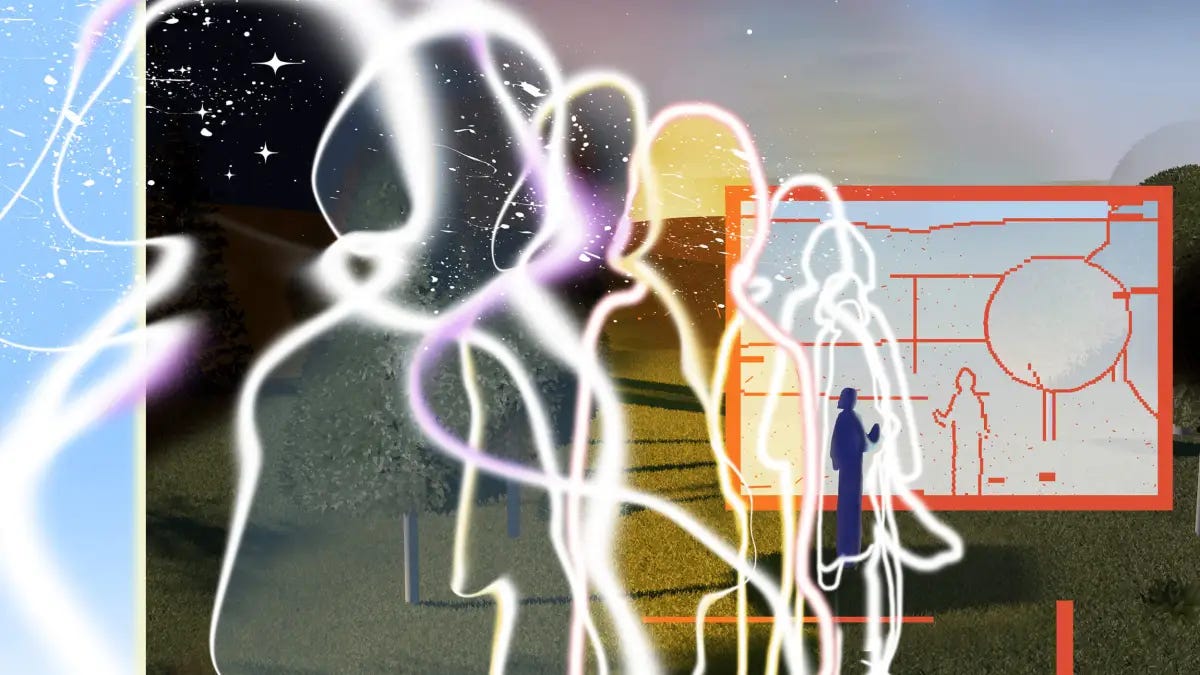
Why AI gets stuck in infinite loops — but conscious minds don’t
I’ve always thought it unlikely that AI will ever become conscious. But before speaking with neuroscientist Anil Seth, I never considered that time may be the key reason why. Computation exists outside of time. A microsecond, a million years — it makes no difference to an AI. But living, conscious creatures must deal with time and entropy. “Unlike computers,” Seth writes, “we are beings in time — embodied, embedded, and entimed in our worlds.” Without this deep grounding, AI may never become conscious or develop the intelligence needed to break free from the “infinite loops” that trap machine minds.
Fast Stats
- 2 — The main stages of sleep: non-REM, when consciousness fades, and REM, when it reemerges in dreams.
- 435 — The approximate age of the Universe in petaseconds.
- 29% — The share of participants in a study on the psychedelic 5-MeO-DMT who reached a “peak” experience, described as “everything and nothing.”
- 5 — The most fascinating books on consciousness, as recommended by experts featured in our special issue.
WAKING UP: DEEPER TRANSFORMATION BEGINS HERE.

Observe your mind with fresh eyes
There’s a world of innovation happening in mind science right now, so if you’re looking to go deeper into awareness and meaning, this is a great moment. The Waking Up app blends meditation, philosophy, and neuroscience to provide a practice structure that helps you start your journey toward a more profound transformation — and to discover life’s greater purpose.
THE BIG CHALLENGE
6 questions about consciousness with Annaka Harris
“There’s something exciting about realizing that something you felt 99% sure about wasn’t quite right — or was entirely wrong,” says science writer Annaka Harris. “It paves the way for new questions and better understanding.” In this wide-ranging interview, Harris challenges the assumption that consciousness emerges from complexity, instead making the case for seeing it as a fundamental feature of reality.
MINI PHILOSOPHY
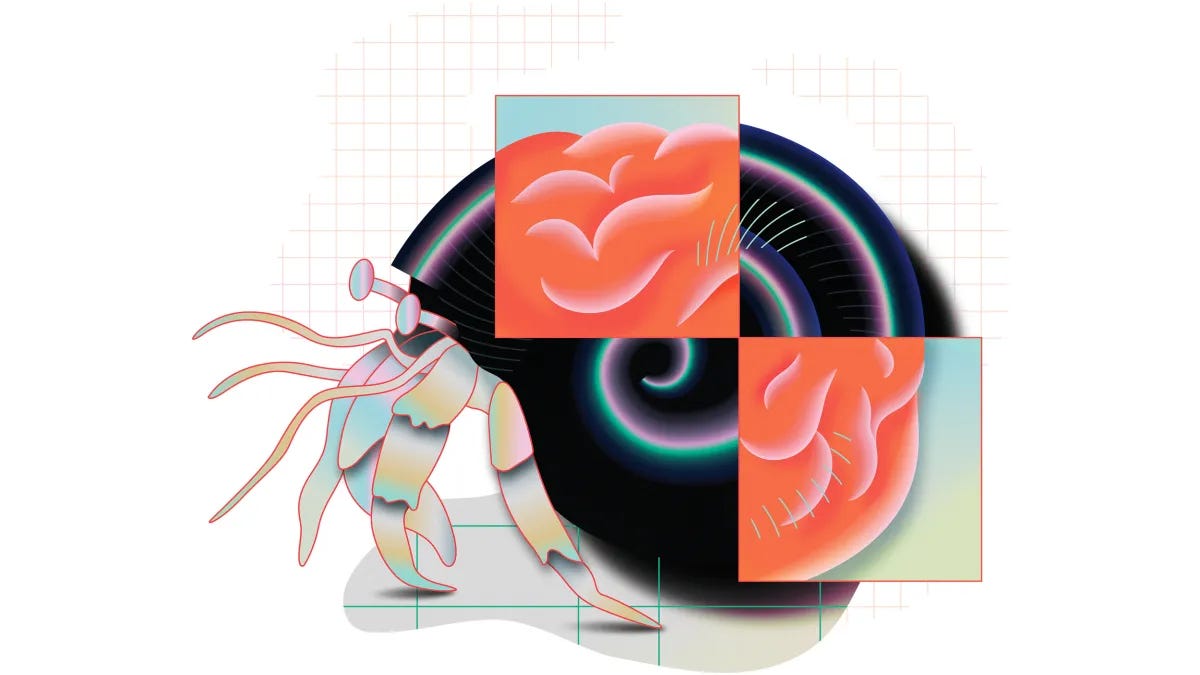
Think like a crow, choose like a crab: The animals inside our minds
By Jonny Thomson
When we talk about human consciousness, it’s easy to ignore the fact that it developed. Our minds were not dropped here like some celestial gift of Athena. Our consciousness didn’t light up overnight. The heavy, grey blancmange inside our skulls was crafted over billions of years of evolution. How we think, and even why we think, exists as a tiny dot on an unimaginably vast timeline — a timeline which stretches into the future as much as the past.
When we talk about “consciousness,” we often use it as shorthand for a variety of cognitive processes: imagination, deliberation, awareness, desire, and so on. Each of these has counterparts in the animal world. Each of these came from somewhere. And when we view our consciousness and intelligence from this perspective, we can start to learn more about what mindedness actually means.
This week, let my interviewee, Peter Godfrey-Smith, take us on a zoological journey inside different kinds of minds.
Subscribe to Mini Philosophy on Substack for even more from Jonny Thomson.
Popular Columns
- Business: The best question a leader can ask: “What would my replacement do?”
- Starts With A Bang: Ask Ethan: Did life begin when the Universe was room temperature?
- Books: The last witnesses: Preserving the history of Hiroshima and Nagasaki
- Freethink: What if humans mastered every aspect of nature?
THE BIG POSSIBILITY
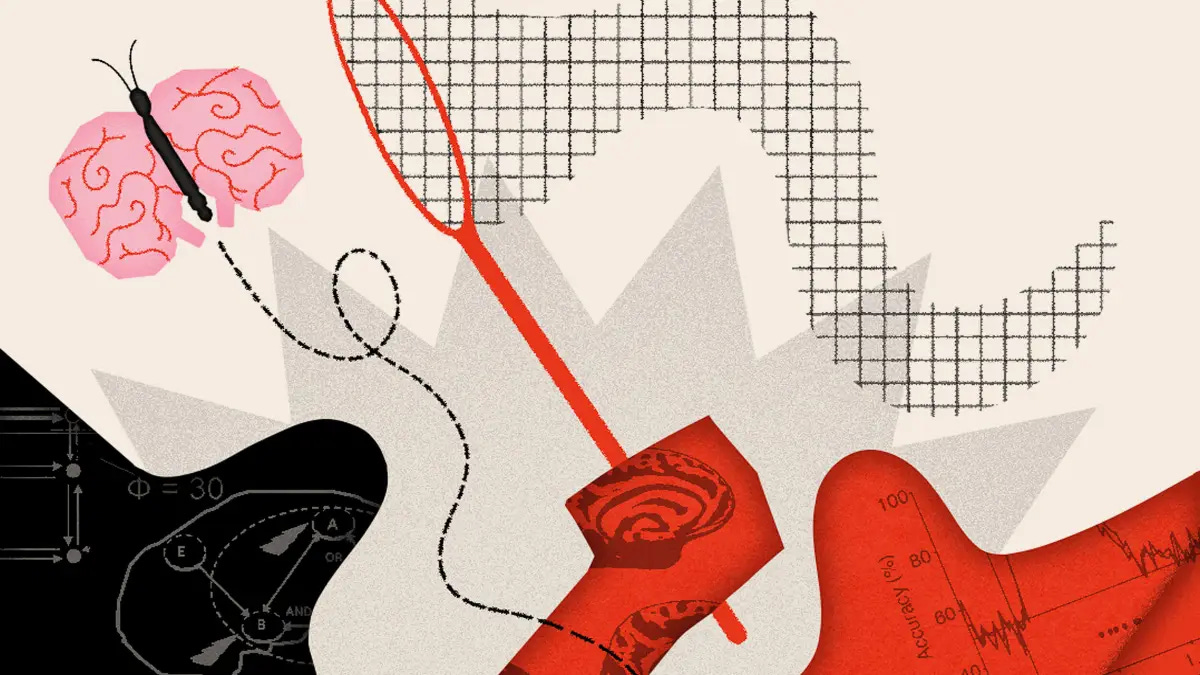
Why the 21st century could bring a new “consciousness winter”
For much of the 20th century, “consciousness” was a forbidden word in the sciences. “It was simply thought of as too philosophical, too strange,” says neuroscientist Erik Hoel, who dubbed that period of frozen research a “consciousness winter.” He fears this century might see another. The most likely way that would happen, according to Hoel, is through the development of artificial general intelligence. This milestone wouldn’t necessarily make people think AI is conscious — just that it’s extremely intelligent. And that, Hoel thinks, might lead people to believe “consciousness doesn’t matter much.”
Stephen Johnson is the managing editor at Big Think.

Subscribe
Get more from Big Think:
Mini Philosophy | Starts With A Bang | Big Think Books | Big Think Business
Subscribe to Big Think
Hundreds of paid subscribers
Learn from the world’s biggest thinkers.Subscribe
By subscribing, I agree to Substack’s Terms of Use, and acknowledge its Information Collection Notice and Privacy Policy.